



Choosing a 5 amino 1mg Powder supplier starts with clarifying exactly what the product name means—not simply comparing prices. For procurement teams, an ambiguous label can create costly gaps in chemical identity, batch documentation, and permitted use. Before requesting a quotation, confirm the full chemical name and CAS number, establish whether “1mg” refers to quantity or concentration, and request a batch-specific certificate of analysis (COA).
A low quotation is attractive until the receiving laboratory cannot reconcile the label with its protocol. The better purchasing decision is the one that leaves fewer unanswered questions between the initial inquiry and batch release.
Resolve the product identity before comparing suppliers
“5 amino 1mg” is not, by itself, a sufficiently precise chemical specification. It may be a shortened catalog description, a search phrase, or a label combining an incomplete compound name with a pack quantity. Do not assume that similar-looking listings refer to the same substance.
Ask each supplier to confirm the following in writing:
- Full chemical identity: systematic name, accepted synonyms, CAS number, molecular formula, and molecular weight.
- Supplied form: free compound, salt, hydrate, solvate, or formulated mixture, including counterions where relevant.
- Meaning of “1mg”: nominal net powder mass, active-equivalent content, or another quantity basis. If concentration is intended, require complete units and the solvent or matrix.
- Composition: whether the material is neat powder or contains excipients, carriers, or stabilizers.
- Intended grade: research reagent, analytical reference material, or another explicitly documented grade.
A CAS number is useful, but it should agree with the stated name, structure, and supplied form. If those details conflict, pause the purchase rather than choosing whichever identifier seems most familiar.
For a nominal 1 mg pack, also ask how the quantity is controlled. Direct weighing, preparation from a characterized solution, and active-content calculations require different supporting records. A tiny vial does not necessarily contain exactly 1 mg of usable target compound.
What a useful COA should tell procurement
A COA is valuable only when it describes the material you will receive. A sample certificate can support early screening, but it should not substitute for the actual batch document at release.
“99% HPLC” does not automatically mean 99% target compound by weight. Area normalization may not account for water, residual solvents, inorganic residues, or impurities that the detector does not adequately measure. Ask whether the result is chromatographic purity or a quantitative assay using a suitable reference standard.
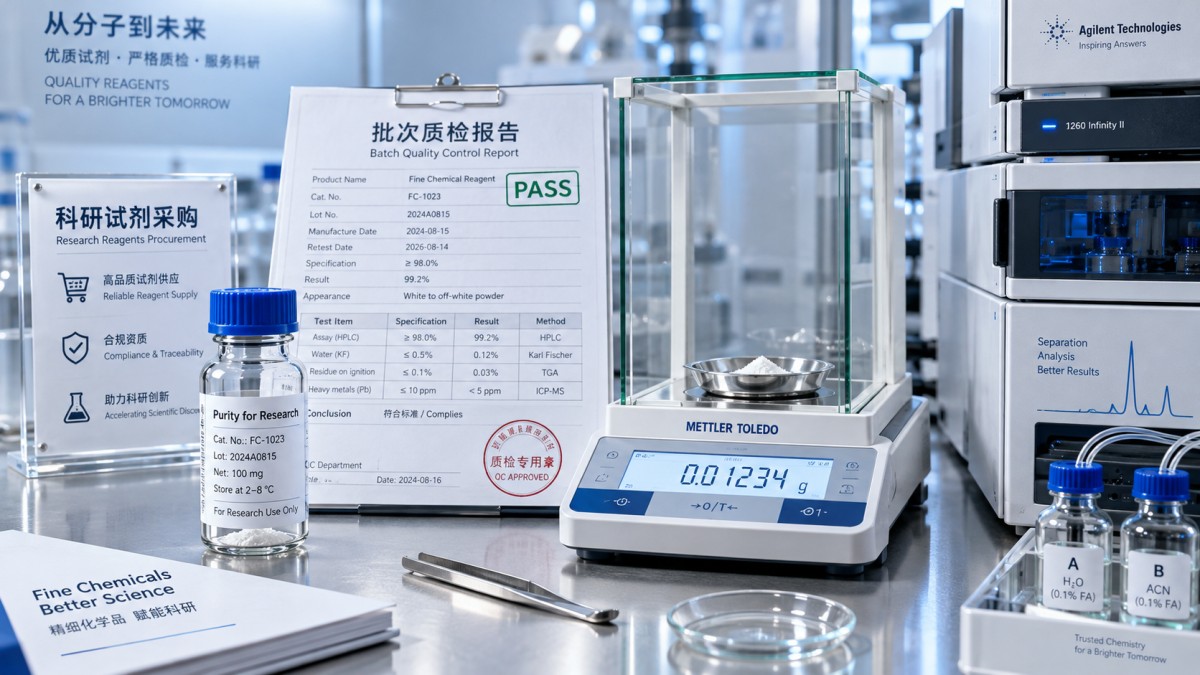
For critical work, request the chromatogram and enough method information for your technical team to assess relevance. Acceptance criteria should be agreed before ordering. Where reference-standard suitability matters, ask about characterization and assigned content; ordinary high-purity powder is not automatically a certified reference material.
Evaluate the 5 amino 1mg Powder supplier behind the paperwork
A polished document package cannot replace traceability. Establish whether the seller manufactures the material, repackages it, or distributes another producer’s batch. Each arrangement can be acceptable, provided responsibilities and records are clear.
For repackaged quantities, ask how the original manufacturer’s lot connects to the supplier’s internal lot, how containers are selected, and how weighing and labeling are verified. Small quantities make transfer losses, static effects, moisture exposure, and container retention worth discussing.
Supplier qualification should also cover change notification. A change in synthesis route, manufacturing site, analytical method, or packaging can affect comparability even when the catalog number stays unchanged. Agree on which changes require notice and whether your laboratory must approve them.
Request an SDS for hazard communication and a technical data sheet where available. If a supplier mentions ISO certification or cGMP practices, verify the relevant site, scope, and supporting documents. Neither claim alone establishes that a particular research chemical meets your specification.
Research-use terms belong in the purchasing decision
“Research use only” is a restriction on intended use, not a safety assessment or permission for human administration. It does not establish suitability for medicines, dietary supplements, cosmetics, or veterinary products.
Before issuing a purchase order, confirm that the supplier’s terms align with your laboratory’s intended activities and applicable rules in the destination market. Review any prohibited uses, buyer declarations, import requirements, and institutional approvals. Route unresolved questions to your compliance team.
The contract should also address what happens if the material fails incoming inspection. Define the inspection window, evidence required for a claim, procedures for disputed analytical results, and the available remedy. A return policy that expires before your laboratory can test the batch offers limited protection.
Compare total usable cost, not the vial price
Two quotations for a “1 mg” product may cover very different purchases. One could include characterized neat material with batch records; another could describe nominal fill without an assay basis. Until those differences are resolved, a price comparison is incomplete.
A practical cost model includes the purchase price, freight, import charges, receiving tests, qualification effort, and likely handling losses. Where data permit, compare cost per usable quantity of the confirmed compound rather than cost per container. Do not apply a chromatographic purity percentage as a mass correction unless its reporting basis supports that calculation.
- Sample versus routine supply: establish whether the quoted quantity is a trial pack and whether later orders use the same specification.
- Lead time: distinguish available stock from material awaiting production, testing, or repackaging.
- Packaging and storage: confirm suitable protection and any justified transport controls.
- Repeat availability: ask whether future lots will have comparable documentation and whether retained samples are available.
A modestly higher purchase price can be worthwhile when it reduces repeat testing or rejected experiments. Conversely, expensive packaging adds little value if identity and quantity remain uncertain.
Keep adjacent ingredient sourcing separate
Procurement teams often source research chemicals alongside formulation ingredients. Jinan Jianfeng Chemical Co., Ltd., established in 2011, focuses on research, development, and global supply across pharmaceutical, nutraceutical, and cosmetic raw-material categories. Such a broad portfolio makes precise product-level qualification especially important.
For example, its listed Paradol Powder is identified as 6-Paradol, CAS 27113-22-0, with molecular formula C17H26O3 and a stated purity specification of ≥98% by HPLC. Listed pack sizes are 1 kg, 5 kg, and 25 kg. This is a separate ingredient inquiry—not evidence of identity, equivalence, or availability for an ambiguously labeled “5 amino 1mg” product.
For that ingredient, request the current batch COA, SDS, and applicable technical documentation, then assess suitability for the proposed formulation and destination market. Portfolio descriptions and application suggestions should never replace product-specific regulatory review.
Send an RFQ that makes the answers comparable
A useful request for quotation can be brief: “Please confirm the full chemical identity and supplied form, explain the 1 mg quantity basis, and provide the proposed specification, a representative COA, available batch documentation, packaging details, lead time, and research-use terms. Please identify whether you manufacture or repackage the material and state the procedure for nonconforming deliveries.”
Keep the order on hold if the identity remains ambiguous, the COA cannot be linked to the shipment, or the permitted use conflicts with your project. Once those gates are cleared, price becomes meaningful—and procurement can choose on evidence rather than on a familiar-looking product label.
News
- ▶ Pharma West Africa 2026
- ▶ Choosing a “5 Amino 1mg” Powder Supplier: Identity, COA, and Research-Use Terms
- ▶ NAD for Anti-Aging: Separating Biological Rationale from Human Evidence
- ▶ Pharmaceutical-Grade PDRN: Mapping Quality Data to the Intended Use
- ▶ Copper Peptide Pricing: Compare Cost per Gram of Active, Not Just Powder
Message
Chemical Engineering Field
24/7 before-sales and after-sales services
Comprehensive technical support