



Is a copper peptide water soluble in your skincare formula? Some copper peptides, including copper tripeptide-1, can be supplied in water-soluble forms, but that does not mean every material will dissolve at every concentration or remain clear after the rest of the formula is added. The exact ingredient, its supplied form, water quality, pH, and other ingredients all affect the result.
A useful check starts with the material in water, then moves to the complete formula. A clear premix is encouraging, but it is not proof that the peptide will remain compatible, stable, or evenly distributed throughout manufacturing and storage.
Start with the exact material, not just the name “copper peptide”
“Copper peptide” describes a category, not a single standardized raw material. A supplier may offer a powder, a diluted aqueous solution, or a blend containing additional solvents, preservatives, or other ingredients. Two products with similar marketing names may need different handling.
Before weighing a batch, check the ingredient identification and supplier documentation for the supplied form, recommended use conditions, storage instructions, and any stated solubility limits. For a diluted solution, distinguish the amount of supplied material from the amount of active peptide it contains. Otherwise, the test concentration may not match the intended formula.
The solvent listed for a raw material also matters. A peptide that dissolves in water is not necessarily soluble in oils or in a concentrated mixture of glycols and other solvents. Similarly, a finished product may contain water but still present a different environment from a simple water premix.
A practical solubility check before production
Use a small, accurately weighed sample and clean equipment. Match the planned process as closely as practical, including water quality, temperature, mixing method, concentration, and order of addition. Record what happens at each stage so that a problem can be traced to a specific change.
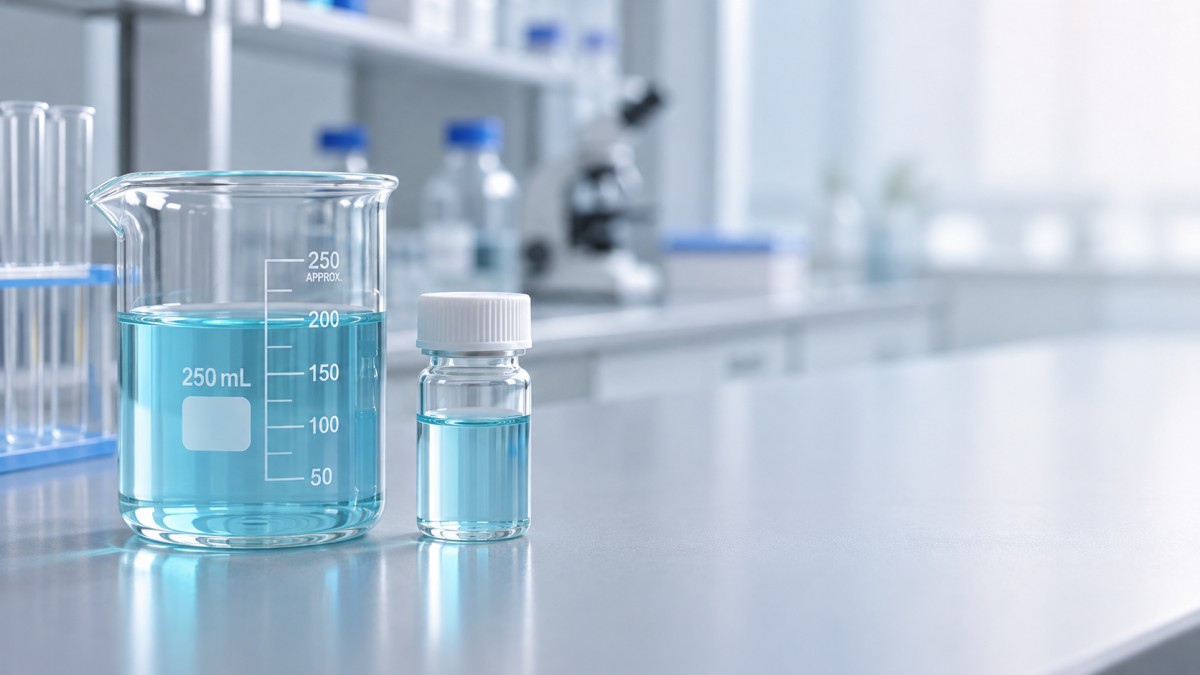
- Prepare the water phase. Use the same grade of water planned for production, typically purified or deionized water where the formula specifies it. Note its initial pH and temperature.
- Add the peptide gradually. Introduce the material under controlled mixing, following the supplier’s instructions. Allow enough time for the particles to wet and disperse before judging whether they have dissolved.
- Inspect the premix. Look for particles, haze, sediment, or material adhering to the vessel. Record the appearance and pH; do not rely on color alone as an indicator of dissolution.
- Introduce the premix into the formula. Add it at the intended manufacturing stage and temperature. Observe the batch after each significant addition, particularly when introducing acids, salts, polymers, or fragrance.
- Recheck over time. Examine the sample after mixing and during a planned stability assessment. Compare samples held under relevant storage and temperature conditions, using the same container type where practical.
For a transparent serum, clarity can be an especially useful screening observation. For an opaque cream, visual inspection is less informative because droplets and other dispersed ingredients can conceal particles. In either case, appearance alone cannot establish peptide concentration or chemical stability; use an appropriate analytical method when the product specification requires confirmation.
What can change the result?
Water quality and concentration
Minerals and other dissolved substances in water can change how a formula behaves. If a premix is clear with purified water but hazy with another water source, investigate the water and the full ingredient combination before changing the peptide level.
Concentration is equally important. A material may dissolve at the intended use level but form particles when an operator tries to make an unnecessarily concentrated stock solution. If a stock is required, test it at its actual concentration and storage conditions, not just after dilution into the final batch.
Avoid assuming that more mixing will always solve the problem. Persistent particles may indicate that the material has not dissolved under those conditions. Excessive agitation can also introduce air, making the appearance harder to assess.
pH and adjustment method
The pH of the premix and finished formula can affect solubility and stability. Work within the supplier’s recommended range for the specific material and the requirements of the complete formula. There is no single pH range that should be applied to every copper peptide product.
How the pH is adjusted matters as well. Adding a concentrated acid or alkali directly to a small peptide-rich area can create a temporary local extreme even when the final measured pH looks acceptable. Use the established adjustment procedure, mix thoroughly, and measure again after the batch has equilibrated. Check appearance after the adjustment, not just before it.
Other ingredients and order of addition
Potential compatibility issues are not limited to ingredients that look visibly incompatible in isolation. Chelating agents can interact with metal ions, while acids, electrolytes, polymers, and other ingredients can alter the surrounding environment. The outcome depends on the specific peptide complex and the complete formula.
Test a new combination in small batches, adding ingredients in the intended production order. If haze appears only after a particular addition, compare a control without that ingredient and, where appropriate, a sample with a different addition order. Change one variable at a time so the result is interpretable.
Some cosmetic peptides are selected for different purposes. For example, Dipeptide Diaminobutyroyl Benzylamide Diacetate is a separate cosmetic peptide used in expression-line care concepts, not a copper peptide or a substitute for copper-peptide solubility data. If both are considered for a formula, assess each supplied material and then test the combination in the finished base.
When a clear premix turns cloudy
First, identify when the change occurred. Cloudiness immediately after dilution suggests a different investigation from sediment that appears after storage or a temperature change. Keep an untouched reference sample where practical and compare it with the affected batch.
- Cloudiness after another ingredient is added: check the addition order, local concentration, pH change, and compatibility with that ingredient.
- Particles after cooling: check whether the premix or final product was near its solubility limit and whether the observed temperature reflects expected storage conditions.
- Sediment in a stock solution: review its concentration, mixing time, water quality, and storage conditions before using it in production.
- Unexpected color change: compare it with an appropriate control and investigate alongside pH, appearance, packaging, and analytical results. Color by itself does not establish whether the peptide remains intact.
Do not filter out unexplained particles and assume the batch is corrected. Filtration may remove some of the material the formula was intended to contain, while leaving the underlying compatibility issue unresolved. Hold the affected batch for assessment under the site’s quality procedure.
Move from bench results to a controlled batch
A successful bench sample is a starting point. Larger vessels can mix differently, and the time between additions may change during scale-up. Record the target temperature, mixing conditions, addition sequence, pH measurement points, and appearance criteria in the manufacturing instructions. Train operators to report deviations such as persistent particles or an unexpected change after pH adjustment.
Before release, assess the finished product against its specifications rather than relying on the initial premix. Where peptide content or stability is a critical quality attribute, an appropriate assay and stability program provide information that a visual check cannot. Keep supplier documents and batch observations together so that future changes in raw material, water source, or process can be evaluated against a clear baseline.
News
- ▶ Pharma West Africa 2026
- ▶ Water-Soluble Copper Peptides: Solubility Checks for Skincare Formulas
- ▶ Formulating Cosmetics With 3-O-Ethyl-L-Ascorbic Acid: Stability Factors
- ▶ Clascoterone and Skin Inflammation: Mechanism and Clinical Evidence
- ▶ What Drives Clascoterone Bulk Prices Beyond the Quoted Unit Cost?
Message
Chemical Engineering Field
24/7 before-sales and after-sales services
Comprehensive technical support