



NAD as an Energy Ingredient: Cellular Role vs. Supplement Evidence
NAD plays a central role in cellular energy metabolism, helping enzymes transfer electrons during the processes that convert nutrients into usable energy. But does its biological importance mean that taking it as a supplement improves energy levels? For anyone researching NAD as an energy ingredient, the distinction between cellular function and clinical evidence is essential. This article examines how NAD works, what studies suggest about NAD-related supplements, and where questions remain.
What NAD actually does inside a cell
Nicotinamide adenine dinucleotide, or NAD, is a coenzyme found in living cells. In its oxidized form, NAD+, it accepts electrons during metabolic reactions. The resulting reduced form, NADH, can transfer those electrons to the mitochondrial electron transport chain, which helps drive the production of adenosine triphosphate (ATP), a molecule cells use to carry out work.
This is not a simple one-way conversion. Cells continually recycle NAD+ and NADH as part of a network that includes glycolysis, the citric acid cycle and other metabolic pathways. NAD+ also serves as a substrate for enzymes involved in processes such as DNA repair and cellular signaling. Those reactions consume NAD+, so cells must replenish it through synthesis and recycling pathways.
The practical distinction is that NAD is not a fuel in the same sense as carbohydrate or fat. It helps cells process energy, but taking more of an NAD-related compound does not automatically give a person more usable energy or resolve the many possible causes of fatigue.
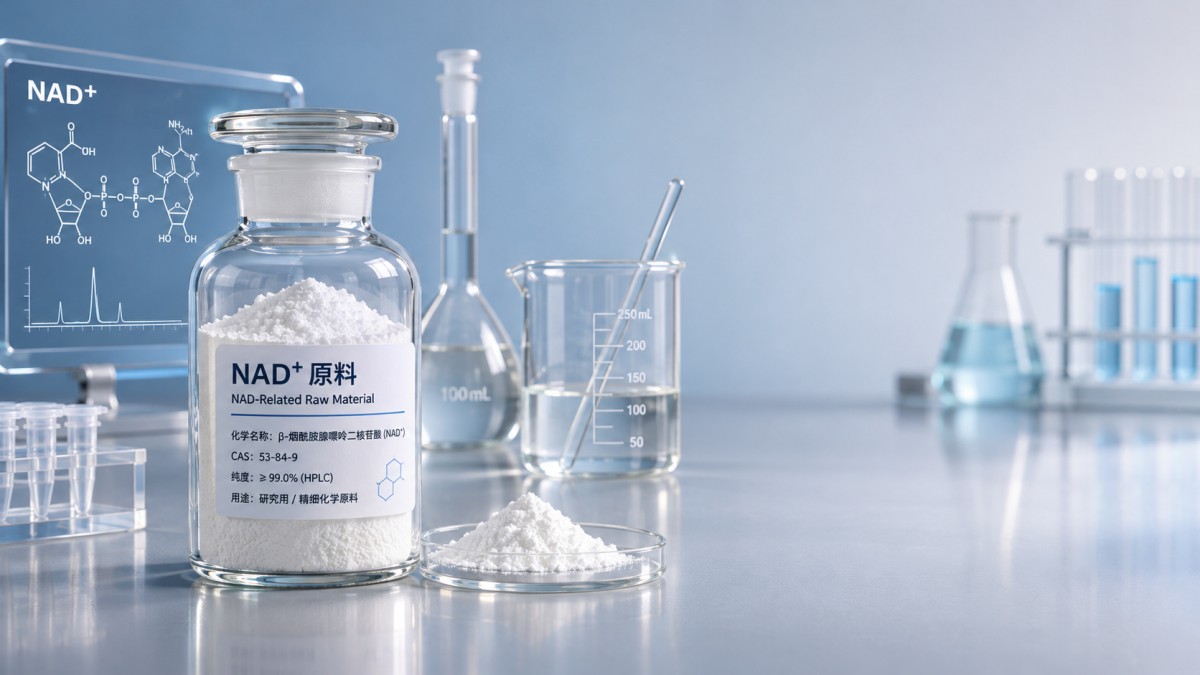
NAD, NR and NMN are not interchangeable ingredients
A supplement discussion may use “NAD” as shorthand for several different substances. That creates confusion when a product claim is supported by research on a different compound.
- NAD+ is the coenzyme itself. Its effects when taken orally require evaluation of the specific formulation and its fate during digestion and absorption.
- Nicotinamide riboside (NR) is a vitamin B3-related precursor that cells can use in pathways that produce NAD+.
- Nicotinamide mononucleotide (NMN) is another NAD+ precursor. Its route from ingestion to cellular metabolism is an active research topic.
- Niacin and nicotinamide are established forms of vitamin B3 that participate in NAD synthesis, but they have distinct properties and should not be treated as identical to NR or NMN.
For a formulator, the name on the label is the starting point, not a complete specification. Chemical identity, salt form where applicable, assay method, impurities, moisture sensitivity and stability in the intended product all matter. A study using one ingredient and dose cannot automatically substantiate a finished product containing another.
What human studies can—and cannot—tell us
Some human studies have found that oral NAD precursors, particularly NR and NMN, can raise NAD-related measurements in blood. That is useful evidence of a biological response. It is not, on its own, evidence that participants felt less tired, produced more ATP throughout the body or performed better in daily life.
The difference between a biomarker and a lived outcome matters. Blood measurements do not necessarily describe what happens in every tissue, and a change in an NAD-related marker does not establish that a person's baseline level was limiting their energy. Studies looking at exercise performance, metabolic measures or perceived fatigue have produced mixed results, partly because they differ in participant health, age, dose, duration and the outcomes selected.
For example, a trial in a small group of older adults cannot be assumed to predict the experience of a healthy younger person taking a different product. Likewise, a positive finding on a laboratory measure should not be rewritten as proof of an everyday energy benefit unless the study measured that benefit directly.
Published research offers useful points of reference. A randomized trial by Martens and colleagues, published in Nature Communications in 2018, examined oral NR in healthy middle-aged and older adults and reported changes in the blood NAD metabolome. A 2022 randomized trial by Igarashi and colleagues in Frontiers in Nutrition investigated NMN supplementation and physiological measures in healthy older adults. Neither paper should be read as a blanket endorsement of every NAD-related supplement or energy claim; the study populations and endpoints deserve a close look.
Reading an “energy” claim with the right questions
The word “energy” can refer to cellular metabolism, exercise capacity or simply how alert someone feels. These are related but different outcomes. When reviewing a product or its supporting research, it is worth checking:
- What was measured? A blood NAD marker, a fatigue questionnaire and an exercise test answer different questions.
- Who was studied? Results may depend on participants’ age, health status and baseline characteristics.
- Does the product match the evidence? Compare the ingredient, dose, formulation and duration—not just the headline.
- Were other active ingredients present? Caffeine or other stimulants can affect perceived alertness, making it difficult to attribute an effect to an NAD precursor.
- Is the claim appropriate for the market? Ingredient status and permitted supplement claims vary by jurisdiction and can change; current requirements should be checked for the specific product.
Safety deserves the same specificity. Short-term tolerability findings for one compound and dose do not establish long-term safety for all populations. People who are pregnant, managing a medical condition or taking medication should seek advice from a qualified healthcare professional before starting a supplement. Persistent or unexplained fatigue also warrants medical assessment rather than being treated as proof of low NAD.
Why ingredient quality and intended use matter
In fine chemicals, the same broad marketing vocabulary can cover ingredients intended for very different uses. A nutraceutical developer evaluating an NAD precursor needs documentation relevant to oral use and the target market, including an appropriate certificate of analysis, impurity information and stability data for the proposed formulation. A high assay value alone does not answer whether an ingredient is suitable for ingestion or whether it will remain within specification through shelf life.
The distinction is equally clear in cosmetics. Jinan Jianfeng Chemical Co., Ltd., established in 2011, supplies raw materials and customized solutions across pharmaceutical, nutraceutical and cosmetic applications. Its Acetyl Hexapeptide-8 is a cosmetic-grade peptide powder offered for professional skincare formulation, not an NAD ingredient or an oral energy supplement. That separation of identity, grade and intended use is a useful reminder when comparing any materials in a supplier portfolio.
For now, the most defensible reading is a measured one: NAD is indispensable to cellular metabolism, and certain precursors can influence NAD-related blood markers in humans. Whether a particular supplement improves a particular person's energy remains a separate question—one that needs a matching clinical endpoint, a suitable study population and evidence for the actual ingredient being considered.
News
- ▶ Pharma West Africa 2026
- ▶ NAD as an Energy Ingredient: Cellular Role vs. Supplement Evidence
- ▶ Water-Soluble Copper Peptides: Solubility Checks for Skincare Formulas
- ▶ Formulating Cosmetics With 3-O-Ethyl-L-Ascorbic Acid: Stability Factors
- ▶ Clascoterone and Skin Inflammation: Mechanism and Clinical Evidence
Message
Chemical Engineering Field
24/7 before-sales and after-sales services
Comprehensive technical support