



Paraxanthine is the primary compound produced when the body metabolizes caffeine, but its role extends beyond being a simple breakdown product. As interest grows in caffeine metabolism and functional ingredients, researchers and nutraceutical formulators are looking more closely at what this molecule does—and what remains uncertain. Understanding the distinction between a caffeine metabolite and caffeine itself is a useful starting point.
What Is Paraxanthine?
Paraxanthine, also known as 1,7-dimethylxanthine, belongs to the xanthine family of compounds. Its relatives include caffeine, theobromine and theophylline. The body produces it primarily in the liver as caffeine is metabolized, mainly through an enzyme called CYP1A2.
It is not an inactive waste product. Like caffeine, it can interact with adenosine receptors involved in regulating alertness. That makes it relevant to discussions of stimulation, exercise research and ingredient development. But a shared mechanism does not mean that a given amount will behave identically to the same amount of caffeine, or that their effects are interchangeable.
In chemical terms, the compound has the molecular formula C7H8N4O2, a molecular weight of 180.16 g/mol and the CAS number 611-59-6. These identifiers are useful when reading research papers or checking whether an ingredient document refers to the intended substance rather than another xanthine.
How It Relates to Caffeine
After a cup of coffee, caffeine enters the bloodstream and is progressively broken down. One major metabolic pathway removes a methyl group to form 1,7-dimethylxanthine. Other pathways produce smaller amounts of related metabolites, including theobromine and theophylline. The resulting exposure changes over time: a person is not simply exposed to caffeine alone.
How quickly this process occurs varies between individuals. Genetics can affect CYP1A2 activity, while factors such as smoking, medications, pregnancy and liver function can also influence caffeine metabolism. Consequently, two people drinking the same coffee may experience different caffeine and metabolite exposure.
This also explains why direct intake is a different question from caffeine metabolism. A supplement containing the metabolite delivers the compound itself; drinking coffee produces a changing mixture of caffeine and its breakdown products. Findings from one situation should not automatically be applied to the other.
What Does the Research Suggest?
Researchers are interested in the compound’s effects on alertness, physical performance and metabolism. Its activity at adenosine receptors provides a plausible reason to investigate stimulation, while its relationship with caffeine makes it useful for studying how the body responds after caffeine consumption.
Some small human studies have examined direct supplementation in exercise and cognitive settings. Early findings are of interest, but the evidence base is much smaller than the literature on caffeine. Study populations, doses, comparison groups and measured outcomes differ, so a result from one trial should not be treated as a reliable prediction for every person or product.
Claims that the ingredient is categorically “cleaner,” safer or free from a caffeine-like crash deserve particular caution. Those terms are not substitutes for controlled comparisons. A meaningful assessment would consider dose, timing, sleep, individual sensitivity and how adverse effects were measured—not just whether participants reported feeling stimulated.
Another distinction is easy to miss: a study that measures the metabolite after caffeine intake does not necessarily establish what happens when it is consumed on its own. The participants may still have caffeine and other metabolites in circulation.
Where Formulators and Researchers Encounter It
Sports nutrition is an obvious area of interest because the ingredient is associated with stimulation and exercise research. A developer considering a capsule or powder, however, still needs to establish an appropriate formulation, assess the evidence behind any proposed claims and check whether the intended use is permitted in the target market.
Cosmetic research is another possible area of investigation, but an interesting laboratory rationale is not proof of a finished product’s effect on skin. For a topical formula, solubility, stability, skin compatibility and the behavior of the complete formulation matter. Evidence about oral intake cannot simply be transferred to a cream or serum.
In fine chemicals, the material’s identity and grade matter as much as the proposed application. A powder suitable for exploratory research is not automatically appropriate for a dietary supplement or cosmetic product. Intended use, impurity limits, manufacturing controls and local requirements should all be reviewed separately.
Reading a Raw Material Specification
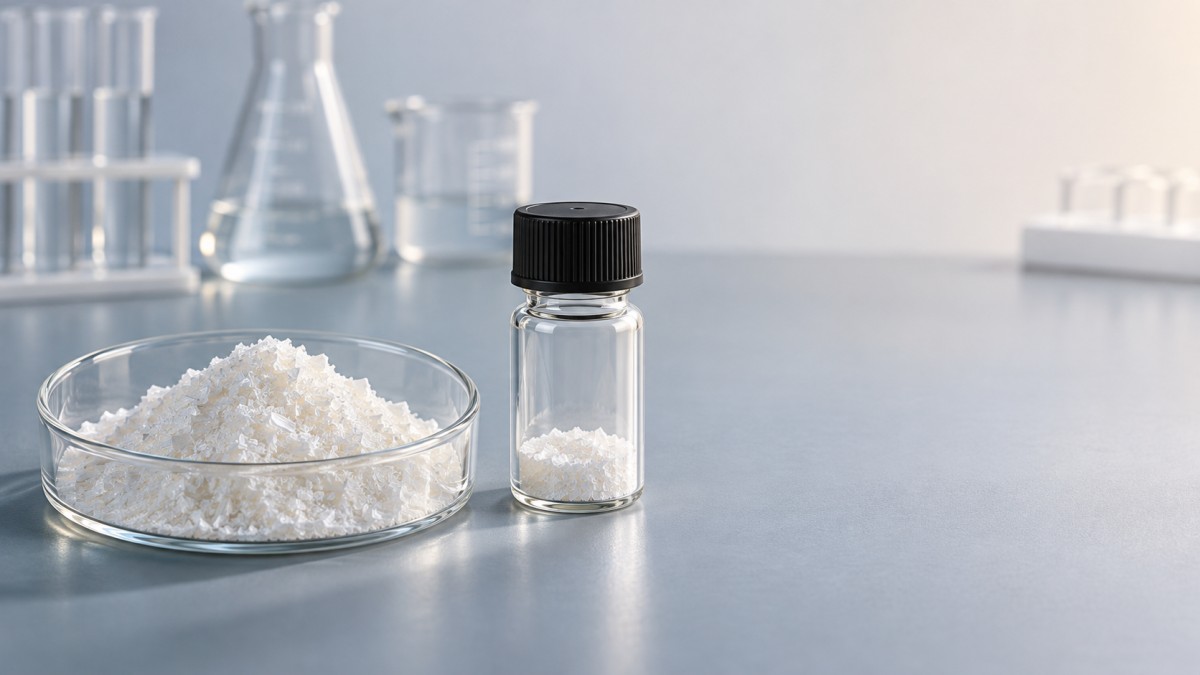
A specification is a useful starting point, but it is not the same thing as a complete quality assessment. Jinan Jianfeng Chemical Co., Ltd., a supplier established in 2011 and active in pharmaceutical, nutraceutical and cosmetic raw materials, lists its Paraxanthine as a white to off-white crystalline powder with a stated purity of at least 98% by HPLC. A batch-specific certificate of analysis can help establish whether a particular delivery meets its stated specification.
The purity figure alone does not describe the remaining material. Depending on the project, it may be necessary to review related substances, residual solvents, heavy metals and microbiological limits, as well as the analytical methods used. Ask for the relevant documentation rather than assuming that one purity number answers every quality question.
The listed storage recommendation is a cool, dry place protected from light. The supplier also lists a 24-month shelf life; confirm the applicable retest or expiry date and storage conditions for the specific batch. For formulation work, a sample can help reveal practical issues such as handling and compatibility before a larger commitment.
Solubility deserves its own check. A general statement that a material is soluble in water or ethanol does not establish how much will dissolve at a particular temperature, pH or concentration. This matters especially in clear beverages and topical products, where an ingredient that disperses initially may later crystallize or alter the appearance of the formula.
Safety and Regulatory Questions
Because the compound has stimulant-related activity, it should not be assumed to be suitable for everyone. People who are sensitive to stimulants, pregnant or breastfeeding, taking medication, or managing a medical condition should seek advice from a qualified healthcare professional before using a product containing it. Combining multiple stimulant ingredients also makes individual effects harder to predict.
Regulatory status depends on the jurisdiction, product category, intended use and claims. The fact that the body naturally produces a substance from caffeine does not by itself establish that adding it to a food, supplement or cosmetic is authorized. Before making a product decision, check the current rules for the intended market and obtain the documentation relevant to that use.
For readers comparing it with caffeine, the most useful takeaway is a distinction rather than a verdict: this is an active caffeine metabolite with an emerging research base, not simply another name for caffeine. Look closely at whether a claim concerns direct intake, metabolism after caffeine, or a specific finished formulation; those are three different questions.
News
Message
Chemical Engineering Field
24/7 before-sales and after-sales services
Comprehensive technical support