



A lower price from a pdrn bulk supplier can become expensive when a shipment passes the supplier’s certificate of analysis but fails incoming testing. A workable contract must define what constitutes an acceptable batch, how conflicting results are resolved, and which changes require approval before shipment. These terms determine whether a disputed lot leads to a prompt replacement or a prolonged interruption with testing, storage, and production costs left unresolved.
For polydeoxyribonucleotide raw materials, commercial terms should reference a controlled specification and a quality agreement. Establish the order of precedence between these documents, the purchase order, and the supplier’s standard terms. Otherwise, a negotiated acceptance requirement can conflict with a general clause treating delivery or payment as final acceptance.
Define the material before negotiating acceptance
“PDRN powder” is insufficient as a contractual description. Record the agreed source material, manufacturing site, physical form, composition, and intended application. Clarify whether the quotation covers isolated material, a salt form, or a preparation containing carriers or other added substances. These distinctions affect both testing and the amount of usable material received.
State whether content is reported on an as-received or dry basis. Moisture can change the relationship between invoiced weight and actual PDRN content. Where payment depends on content, specify the calculation, the supporting test result, and any adjustment mechanism. A dry-basis result should not silently become the basis for pricing an as-received shipment.
Attach the approved specification with its revision identifier. Avoid wording such as “meets current supplier specifications,” which allows the acceptance standard to move without a contract amendment. Each shipment should remain tied to the version approved for that order.
Turn specifications into reproducible acceptance criteria
A numerical limit has little value without a defined method. PDRN contains a distribution of DNA fragment sizes, so an average molecular weight alone can conceal differences in that distribution. If fragment profile affects the intended application, agree on the measurement technique, sample preparation, reporting format, and relevant distribution limits. Results from different analytical approaches should not be treated as interchangeable without evidence of comparability.
The specification should distinguish identity, content, fragment profile, and impurities. An absorbance measurement used to estimate nucleic acid concentration does not independently establish identity or demonstrate that every relevant impurity is controlled. Each acceptance attribute needs a method suited to the question it answers.
Generic catalog language cannot replace this material-specific work. A research chemical such as Compound 7P, listed at 99% purity for controlled non-clinical laboratory research, raises different qualification questions from PDRN. Its stated purity does not establish a suitable acceptance framework for a nucleic acid raw material.
Separate receipt, testing, and final acceptance
Physical receipt should start inspection, rather than automatically establish quality acceptance. Define the inspection period from receipt of both the shipment and the complete required documentation. Missing records should trigger a documented hold, with a deadline for correction and a stated consequence if the deadline is missed.
Specify the release package: a batch-specific certificate of analysis with actual results where applicable, batch and manufacturing identifiers, manufacture and retest or expiry dates, storage conditions, and agreed traceability records. Safety and technical data sheets support handling and interpretation but do not substitute for batch results.
Sampling deserves its own clause. Define a batch, identify how containers are selected, and specify whether samples remain separate or are combined. A composite sample can conceal variation between containers. Retained samples should have agreed quantities, seals, storage conditions, retention periods, and identifiers connecting them to the delivered lot.
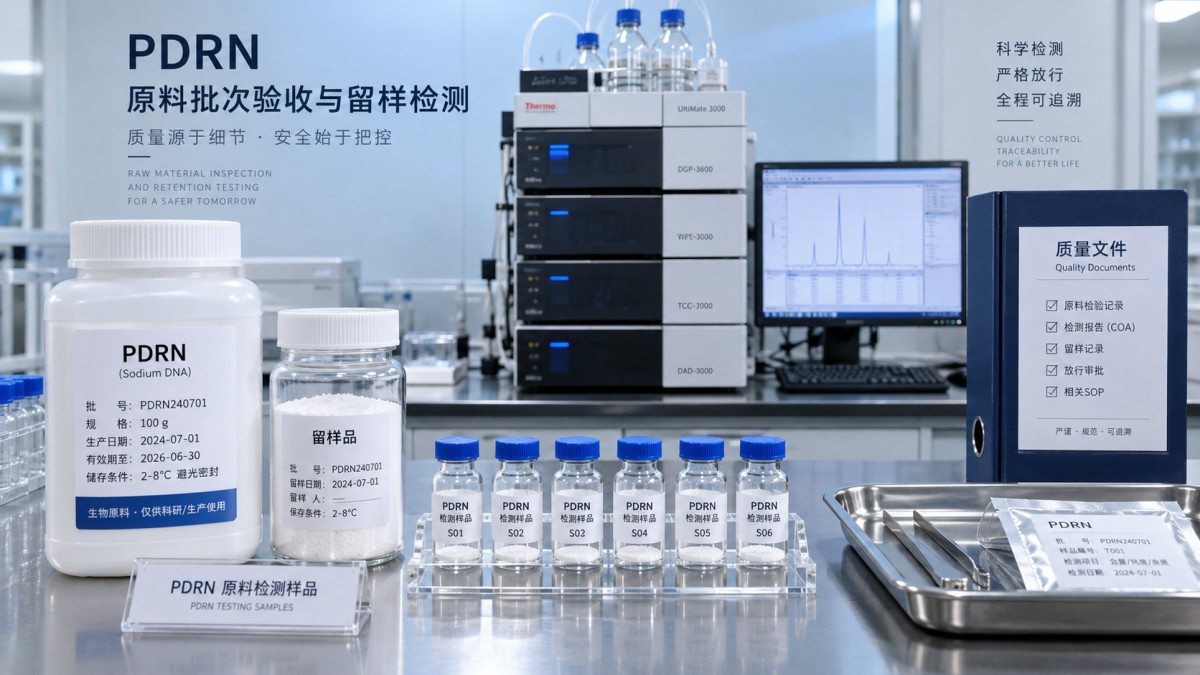
The acceptance workflow should distinguish document review, sampling, laboratory testing, and authorized disposition. State the permitted condition of the material during this period, including quarantine and storage requirements. For temperature-sensitive shipments, define the agreed transport conditions and evidence required to assess an excursion; a temperature record alone does not establish whether the material remains acceptable.
Resolve conflicting results without testing until a pass appears
A failed incoming result should trigger notification and investigation. The agreement should preserve the original result and require review of sampling, handling, method execution, instrument suitability, and calculations before retesting. Repeated analysis without a documented reason creates uncertainty rather than resolving it.
Where laboratories disagree, first determine whether both used the contracted method and reporting basis. Define how retained samples will be exchanged, when a mutually agreed independent laboratory becomes involved, and how its findings affect disposition. Assign testing costs according to the established cause, with a separate rule for unresolved disputes.
Contract remedies should cover replacement or refund, return freight, disposal authorization, and the agreed treatment of additional costs. Set deadlines for initial response, investigation findings, and replacement shipment. A promise to “replace defective goods” offers limited protection when the timing and associated expenses remain undefined.
Acceptance of a deviation should require written authorization identifying the affected batch, quantity, intended use, and conditions. That authorization should not amend future specifications. Include a separate claim mechanism for defects discovered after the routine inspection period, with notification and evidence requirements.
Set change-control thresholds around material impact
Change control should cover modifications capable of altering identity, composition, impurity profile, fragment distribution, stability, or traceability. Relevant examples include a different biological source, extraction or fragmentation conditions, purification steps, production site, critical outsourced operation, release method, packaging contact material, and storage conditions.
Use approval categories that reflect impact. Changes to the approved source, manufacturing site, critical process, or acceptance method should require prior written approval when they could affect the contracted attributes. Administrative corrections with no material effect can follow a notification procedure. Define the boundary explicitly so “minor change” does not become a blanket exemption.
A change notice should explain the reason, affected attributes, supporting comparison data, proposed implementation date, and first affected batch. Method changes need evidence that results remain comparable against the existing limits. Process changes need evidence addressing the attributes the modification could influence; a passing certificate alone may leave that question unresolved.
Choose the notice period around the time required for review, testing, and qualification. Silence should not count as approval unless that mechanism is expressly agreed. Identify who can authorize a change and require traceability between approval records and subsequent shipments.
Connect approved changes to delivery and payment
The contract should define the status of outstanding orders when a change is proposed. Specify whether they will be supplied under the existing approved process, held pending approval, or cancelled under agreed terms. If continued production under the existing process is impractical, establish the transition arrangement before the revised material enters shipment.
Allocate requalification costs according to why the change is occurring and whether it was requested or approved. Also define the remedy for an undisclosed change: shipment hold, investigation, replacement, or another negotiated response. This makes change control enforceable rather than merely informational.
Keep payment milestones consistent with acceptance. An advance payment should not waive quality claims, and an invoice deadline should not silently shorten the inspection period. Evaluate quoted cost against these enforceable terms: the financial value of a contract lies partly in how quickly it restores usable supply when a batch or process change becomes disputed.
News
- ▶ Pharma West Africa 2026
- ▶ PDRN Bulk Supplier Contracts: Setting Batch Acceptance and Change-Control Terms
- ▶ NAD Powder Handling: Controlling Moisture Exposure During Weighing and Storage
- ▶ NAD Factory Audits: Questions About Process Controls and Supply Continuity
- ▶ Sexam Factory Due Diligence: Verify Product Identity and Manufacturing Scope
Message
Chemical Engineering Field
24/7 before-sales and after-sales services
Comprehensive technical support