



A low sexam price can look attractive on a procurement spreadsheet, but the quoted figure is only one part of the total purchasing cost.
Differences in product specifications, purity, documentation, packaging, shipping terms, and supplier reliability can affect both value and supply continuity.
Before accepting a low quote, procurement teams should compare offers on a like-for-like basis and verify the details that matter for their intended application.
This guide highlights the key checks to help buyers make a more informed sourcing decision.
First, Confirm What the Supplier Means by “Sexam”
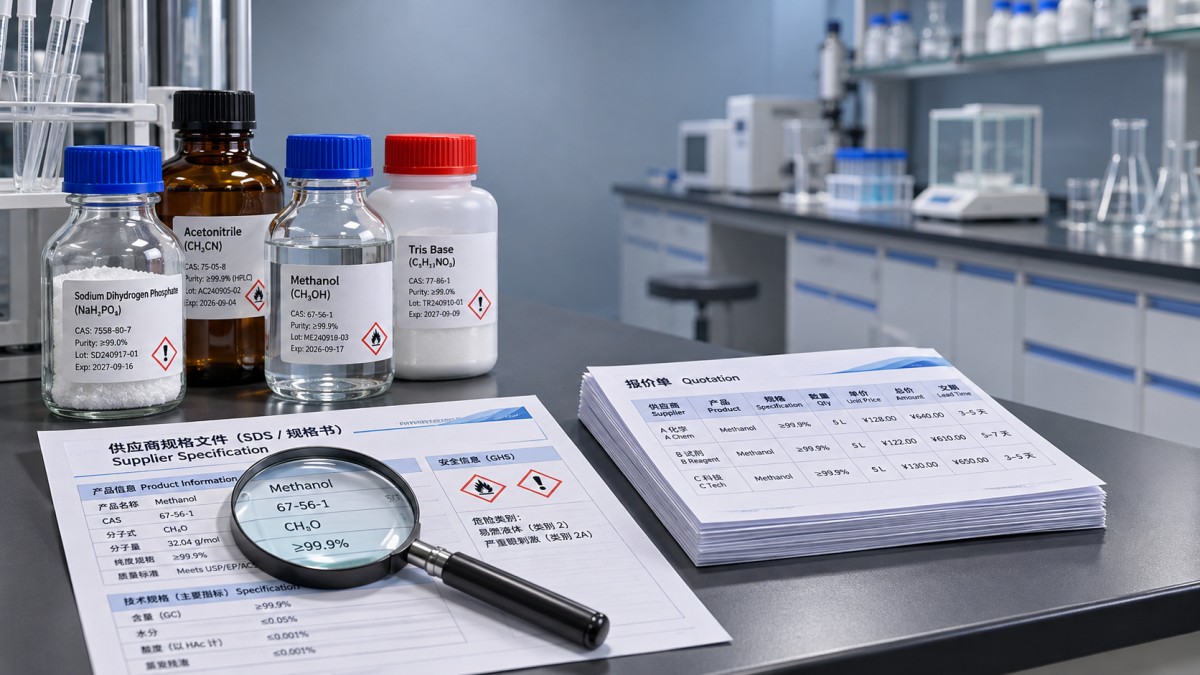
Before comparing prices, establish the exact substance being quoted. The term “sexam” alone does not provide enough information to verify a chemical identity or specification.
Ask each supplier for the full product name, chemical name, CAS number where applicable, grade, intended use, and a detailed technical specification.
Check these identifiers against your approved material specification and purchasing records. Do not assume that similarly named products, trade names, or abbreviations describe interchangeable materials.
If a supplier cannot clarify the product’s identity, pause the comparison. Even an exceptionally low quote has little value if the material is unsuitable.
Is the Low Quote for the Same Specification?
Once identity is confirmed, compare the characteristics that determine whether each offer can be used in your process. A shared product name is not enough.
Request a specification sheet for every offer and align the following parameters with your application and internal acceptance criteria:
- Assay or content, including the analytical method and whether results are reported on an as-is, dry, or other defined basis.
- Impurity limits, including relevant residual solvents, heavy metals, microbial limits, and other application-specific contaminants.
- Physical properties such as appearance, particle size, solubility, moisture content, and any formulation-critical characteristics.
- Grade and intended use, particularly where cosmetic, food, research, or pharmaceutical requirements differ.
- Retest period or shelf life, storage conditions, and the minimum remaining shelf life required at delivery.
A lower assay does not automatically mean poor quality, but it can change the amount required in production. Confirm that the specification is acceptable before adjusting costs.
For example, one kilogram at 80% assay contains approximately 0.8 kilograms of active material. This calculation assumes the stated assay basis is comparable.
Also check whether the quoted material is a pure ingredient, a standardized extract, a diluted blend, or a solution. These forms can have very different economics.
How Should You Compare the Real Cost of Each Offer?
Use a common comparison unit, such as cost per kilogram delivered to your facility. Include costs and losses that are reasonably foreseeable for each offer.
A practical starting formula is: landed cost equals the product price plus freight, insurance, duties, taxes that are not recoverable, customs fees, and local delivery.
Then consider qualification testing, special storage, expected handling losses, and any necessary reformulation. Record these separately so assumptions remain visible to the purchasing team.
For a simple illustration, a $40-per-kilogram offer with $12 in landed charges costs $52 per kilogram before testing. A $46 offer with $3 in charges costs $49.
These figures are examples, not market prices. Actual costs depend on the material, shipment size, route, commercial terms, and applicable import requirements.
If assay differs and your application permits both grades, divide the applicable landed cost by the assay fraction to estimate cost per kilogram of active material.
At $52 per kilogram and 80% assay, the indicative active-material cost is $65 per kilogram. This does not account for differences in impurities or processing performance.
For commercial comparison, use the actual order quantity and currency. Check exchange-rate exposure, payment fees, quote validity, and any charges excluded from the initial offer.
What Do the Shipping Terms Actually Include?
Ask suppliers to state the Incoterms rule, named place, and edition in their quotation. Terms such as FOB or DAP do not describe the same seller obligations.
Confirm who arranges freight, insurance, export clearance, import clearance, duties, and unloading. Allocate any buyer-paid items to the comparison before selecting an offer.
For temperature-sensitive materials, request the proposed packaging, transit conditions, and temperature-monitoring arrangements. A low unit price may disappear if the shipment requires specialized handling.
Check the minimum order quantity, lead time, dispatch location, and partial-shipment policy. A low price tied to excessive inventory can increase cash and storage costs.
Ask how much shelf life will remain on arrival and how delays or temperature excursions are handled. Put agreed conditions in the purchase order.
Which Documents Should You Verify Before Approval?
Request a recent certificate of analysis for the material offered and, before shipment, a certificate for the actual batch. Check results against your approved specification.
The certificate should identify the product, batch, test methods or references, results, and relevant dates. Investigate missing values or results reported without clear units.
A safety data sheet and technical data sheet help assess handling and formulation needs. Confirm that document revisions and product identifiers match the quoted material.
Where certifications are important, request current certificates, their scope, and the issuing body. Verify that the relevant site and activity are covered rather than assuming coverage.
Documentation is product-specific. For example, a supplier listing for PDRN Polydeoxyribonucleotide describes a cosmetic ingredient with a stated purity of at least 95%.
That listing also states refrigerated storage at 2–8°C and protection from light. Buyers should verify current specifications and batch documents before relying on those details.
This example illustrates how documentation and storage affect purchasing decisions; it does not establish that the listed ingredient is the product described as sexam.
Can the Supplier Deliver Consistent Quality?
A competitive sexam price is useful only if the supplier can meet the specification repeatedly. Assess the manufacturer and supply chain, not just the sales quotation.
Confirm whether the seller is the manufacturer or a distributor, identify the manufacturing site, and ask how changes to the source or process are communicated.
Request information about quality controls, traceability, complaint handling, and deviation management. Where risk warrants it, conduct a supplier questionnaire, remote assessment, or site audit.
For critical materials, ask about production capacity, typical replenishment time, stock availability, and contingency arrangements. Do not treat general assurances as a guaranteed delivery commitment.
Be cautious when a supplier refuses to identify the material, avoids batch documentation, changes the quoted specification, or pressures you to pay before basic verification.
These signals do not prove misconduct, but they justify further checks. Escalate unresolved discrepancies to quality assurance before issuing a purchase order.
Should You Test a Sample Before Ordering?
For a new supplier or a material used in a sensitive application, qualify a representative sample against your specification and intended production conditions.
Agree on sample identification and testing methods in advance. Where practical, request a sample from the proposed commercial batch or confirm how representativeness will be established.
Testing may include identity, assay, relevant impurities, and performance in the intended formulation or process. Select tests according to the material’s risk and applicable requirements.
A sample approval does not replace batch control. Require documentation for the supplied batch and define incoming inspection, acceptance limits, and procedures for nonconforming material.
For an initial commercial order, consider a manageable trial quantity and documented acceptance criteria. Scale up only after quality, delivery, and performance meet expectations.
What Should Your Request for Quotation Include?
A consistent request for quotation makes competing sexam price offers easier to evaluate. Send the same requirements to each supplier and ask for itemized responses.
- Exact product identity, grade, specification, intended application, and required analytical methods.
- Order quantity, forecast volume, packaging size, delivery location, and required arrival date.
- Requested Incoterms rule, named place, currency, payment terms, and quotation validity.
- Required batch documentation, certifications, remaining shelf life, and storage or transport conditions.
- Sample availability, lead time, change-notification process, and procedure for rejected material.
Compare responses in a single worksheet and flag any assumptions or missing information. Ask suppliers to revise incomplete quotes before ranking the offers.
Final Procurement Decision
The lowest quoted price is a good deal only when the material, documentation, delivery terms, and supplier performance meet your requirements at an acceptable total cost.
Start by confirming exactly what “sexam” means in your purchase, then compare compliant offers on a landed-cost basis and complete the appropriate qualification checks.
When important details remain unverified, keep the quote conditional. A documented, like-for-like comparison gives procurement and quality teams a stronger basis for approval.
News
Message
Chemical Engineering Field
24/7 before-sales and after-sales services
Comprehensive technical support